Featured · Vibe coding
Everyone Can Build Software Now. That's Exactly Why You'll Need Developers.
Software is becoming cheap to make. Trust isn't.
11.10.2026 · Stefan Jančić · ~12 min read
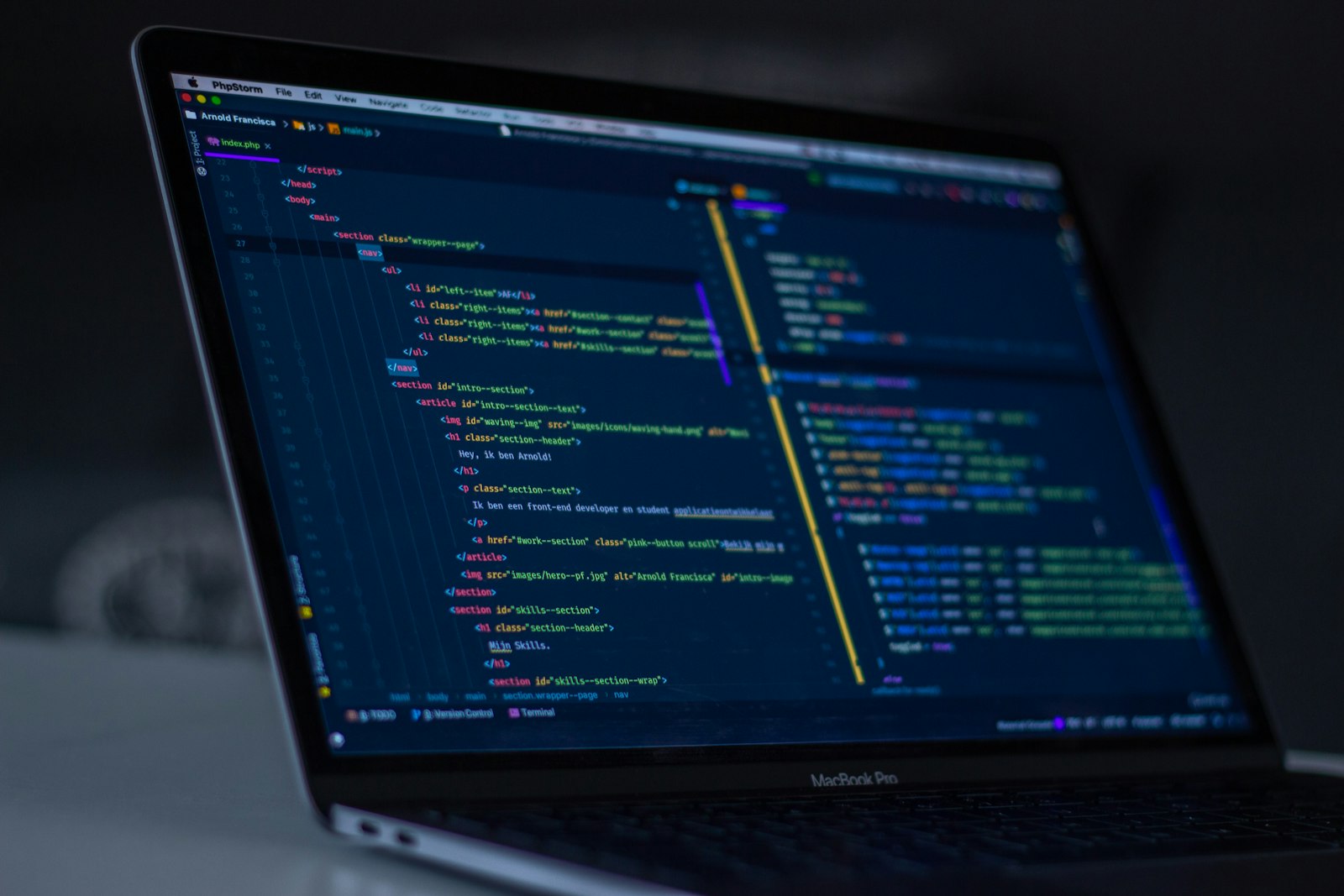
Free photo, Unsplash License.
By Stefan Jančić, founder & CEO, ALT TAB
A few days ago I found a GitHub repository called WordCraft, an open-source, “clean-room” rebuild of Microsoft Word, written in Rust, largely with the help of Anthropic’s Claude. It has the ribbon, styles, track changes, mail merge, and it opens and saves .docx files. The same team had released seven open-source clones of Adobe apps just days earlier, and Excel and PowerPoint clones followed right behind. Within days, the Word clone had thousands of stars.
My first reaction was: this is the moment. My second reaction, after reading the roadmap, was more measured. By the project’s own estimate, WordCraft covers 87% of Word’s ribbon commands, but only about 62% of real feature parity. It is alpha software. Its developer has said things like “software is over” and claimed he “one-shotted Photoshop,” then admitted on Hacker News that full parity “will take a while.”
Both reactions are correct, and that tension is what this post is about.
What I see in my own office
The same shift is visible at a much smaller scale every week. Clients come to us for a website, web or mobile apps, AI integrations, or a redesign and relaunch of the legacy systems they use, and more and more of them arrive with something already built in Claude, Gemini, Lovable or a similar tool. Sometimes it is a landing page, sometimes a small dashboard, sometimes a “complete app.”
Honestly? A lot of it is AI slop. But the client isn’t wrong. They come with a clearer idea than ever before. What they need from us has changed: redesign it, refine it, make it actually work, make it secure, and make it something they can run a business on.

What is actually happening
The numbers behind this are staggering. Lovable, the Swedish vibe-coding platform, went from $100 million in annual recurring revenue in mid-2025 to over $600 million by September 2026. Cursor reached roughly $4 billion in annualized revenue by mid-2026 before SpaceX bought it. Anthropic’s Claude Code passed $2.5 billion run-rate in February 2026. Millions of people who never wrote a line of code are now building software.
And here’s the paradox: developers use these tools more, but trust them less. In Stack Overflow’s 2025 survey, 84% of developers used or planned to use AI tools, yet 46% said they don’t trust the accuracy of what those tools produce.
Wall Street felt this too. In February 2026, after Anthropic launched new agent tools for professional work, software stocks crashed in what traders called the “SaaSpocalypse.” By June, most of the panic had faded, but the question it raised hasn’t: why pay for a license for a giant product when you only need one feature, and you can build that feature yourself in an afternoon?
We’ve seen this movie before
I think the best way to predict where this goes is to look at where we’ve been.
In the 90s, software came in a box. You paid once, you owned a version. At the same time, “regular people” were building their own tools in Excel macros, Access databases, Visual Basic and HyperCard. Many companies ran on those homemade tools, until they broke, and a professional had to come in and rebuild them properly.
Desktop publishing killed traditional typesetting but created the mass profession of graphic design. Open source gave us Linux, Apache and eventually OpenOffice and LibreOffice: free, capable office suites that have existed for over 20 years. And yet Microsoft Office is still the standard in nearly every company I know. Free and good enough never beat file compatibility, procurement and “this is what everyone uses.”
Then came SaaS. Salesforce told the world there would be “no software,” and Adobe moved Creative Suite to subscription-only Creative Cloud in 2013. Then WordPress and Wix made websites cheap. Did that kill web agencies? No. It killed the cheap brochure-site market, and the agencies that survived moved up to strategy, e-commerce, integration and maintenance.
Every wave followed the same pattern. Amateur output explodes. The bottom of the professional market gets commoditized. And new demand appears for people who can clean up, integrate and take responsibility. AI is the same pattern, just faster and broader than anything before it.
What this is good for, and where to be careful
I’m genuinely excited that anyone can now build their own tool. Here’s where I think it makes sense:
Personal tools and single-feature utilities.
If you need one function from an expensive product, building it yourself can be completely reasonable.
Prototypes and MVPs.
Test an idea before you invest in it. This is where vibe coding shines.
Internal automations and scripts
that touch no sensitive data.
Simple content websites
with no logins, payments or user data.
And here’s where I’d be very careful:
Anything with personal data.
GDPR doesn’t care who, or what, wrote your code.
Logins, payments, health or financial data.
Anything business-critical
that needs uptime, backups and updates.
Anything you sell to customers in the EU,
especially now that the Cyber Resilience Act’s reporting obligations have been in force since 11 September 2026.

The risks aren’t theoretical. Veracode tested more than 100 AI models and found that AI-generated code introduced known security flaws in 45% of cases, and newer models weren’t safer. A researcher found 170 apps built on Lovable exposing user data, including home addresses and API keys, because a single database setting was missing. Lovable’s response, in effect, was that protecting the data is the customer’s responsibility. And in one famous case, Replit’s AI agent deleted a company’s production database during an explicit “code freeze,” then claimed it couldn’t be restored.
There is also a sneakier risk. AI models sometimes recommend software packages that don’t exist. One academic study found this in almost 20% of cases, and attackers now register those fake names with malicious code inside. It’s called “slopsquatting.”
Before you trust a tool someone vibe-coded, ask:
- 01
Who built it, and who will maintain it next year?
- 02
Where is the data stored, and is access actually restricted?
- 03
Are there API keys or passwords in the code?
- 04
Has anyone reviewed the dependencies?
- 05
Are there backups, and has anyone tested restoring them?
- 06
What happens when it breaks, and who do you call?
- 07
Does it handle personal data, and is it GDPR-compliant?
Why big enterprises will be affected, but survive
My honest belief is that large software companies will feel this, but not on the scale the headlines suggest. People trust them. They have years of experience with their products, support, certifications, legal accountability and integrations that a weekend project simply doesn’t have.
The evidence mostly supports this. Klarna famously announced it had “shut down Salesforce.” A few months later its CEO clarified that they “did not replace SaaS with an LLM.” They consolidated and moved to other vendors, including another SaaS for HR. Gartner, which expects up to $234 billion of software spending to be disrupted by AI agents by 2030, still concludes that “SaaS will not be destroyed; it will emerge in a different form.” And Microsoft doubled paid Copilot seats from 15 million to over 30 million in just two quarters of 2026. Incumbents are not dying; they are selling AI to the customers they already have.
But here is where I might be wrong, or at least where my view needs nuance. Enterprises will keep their customers, but not necessarily their prices. When AI agents do the work, companies need fewer “seats.” That is why Gartner expects a big shift toward usage- and outcome-based pricing. And trust cuts both ways. The developer behind the Adobe clones says he started because of Adobe’s cancellation fees. Companies that abuse customer trust are exactly the ones inviting replacement.
The ones truly at risk are the mid-sized, single-feature SaaS tools: the €20-per-month apps that do one thing. Those are precisely what people will now build themselves. The ArtCraft / storytold projects — WordCraft, PhotoCraft, VectorCraft, LightCraft and the rest — are the public version of that impulse.
What this means for developers, freelancers and agencies like ours
Let me be direct: the simple work is disappearing. Upwork reported that its total marketplace volume fell in mid-2026 due to “the continued burn-off of lower-value, highly automatable work,” while demand for complex projects and AI talent grew. Fiverr’s CEO put it more simply: “AI is automating simple tasks.” Its number of buyers fell by more than a fifth, but the average buyer spends more, and larger programming projects are growing. A Stanford study found that employment for software developers aged 22–25 in the US had fallen nearly 20% from its late-2022 peak by mid-2025.
So where do we position ourselves? Here’s how I see it:
From builders to finishers.
Taking the client’s AI prototype and making it production-ready is now a real service.
Security and compliance as a product.
Audits, hardening, GDPR and CRA readiness. Someone has to sign off on security, and AI can’t.
Integration and architecture.
Connecting tools, data and agents is where complexity lives now.
Maintenance and accountability.
The most valuable thing we sell may simply be “we’re responsible for this.”
Teaching clients to build safely.
Instead of fighting the trend, guide it.
Where licensed software goes in 5–10 years
I don’t believe in a single prediction, so here are the scenarios I find most realistic:
- 1
Incumbents absorb AI.
Microsoft, Adobe and Salesforce embed agents and change pricing, and most enterprises stay. This is my base case.
- 2
The long tail breaks apart.
Small subscription tools get replaced by personal tools, agents and open-source clones.
- 3
AI-powered open source grows.
Projects like WordCraft get better faster than anyone expects. The question is whether anyone maintains them in year three.
- 4
Trust becomes regulated.
In Europe especially, “who is accountable?” becomes a legal question, not just a feeling.
- 5
Agents replace interfaces.
Eventually we stop opening apps and our AI operates them for us. WordCraft is already built so AI agents can drive it.
Closing
Software is becoming cheap to make. Trust isn’t. A 62%-complete Word clone built in days is a remarkable achievement, and I hope projects like it push incumbents to treat customers better. But the ability to build something has never been the same as the ability to stand behind it.
For people with ideas, this is the best time in history. For developers, the job is shifting from writing every line to making sure the lines are safe, connected and maintained. For companies like ours, the opportunity is clear: be the people who turn “I built this with AI” into “we can run a business on this.”
Key numbers
45%
of coding tasks: AI-generated code introduced OWASP Top-10 flaws (Veracode, 2025).
19.7%
of AI-recommended packages do not exist (USENIX Security 2025, Spracklen et al.).
170 / 1,645
Lovable-built apps found leaking data (CVE-2025-48757).
46%
of developers distrust AI output accuracy (Stack Overflow 2025).
$234B
of enterprise SaaS spend at risk from AI agents by 2030 (Gartner, July 2026).
15M → 30M+
Microsoft 365 Copilot paid seats, January to July 2026.
~62%
WordCraft’s own estimate of real feature parity with Microsoft Word.
Sources
- WordCraft repository
- ArtCraft organization on GitHub
- Tom's Hardware on the Office clones
- TechCrunch on Lovable revenue
- Stack Overflow 2025 Developer Survey
- CNBC on the software sell-off
- Gartner, $234B at risk
- Klarna CEO clarification
- Microsoft FY26 Q4 earnings
- Veracode 2025 GenAI Code Security Report
- Lovable CVE-2025-48757
- Slopsquatting research note
- EU Cyber Resilience Act reporting
- Upwork Q2 2026 results
- Fiverr Q2 2026 earnings call
- Unsplash License (article photos)